In this guide
At a glance
- Start with
- Available daylight
- Small spaces
- Check mature spread
- Water
- Needs vary by species
- Pets
- Check botanical identity and toxicity
- Fragrance
- A personal preference, not a sleep treatment
- Placement
- Stable and easy to reach
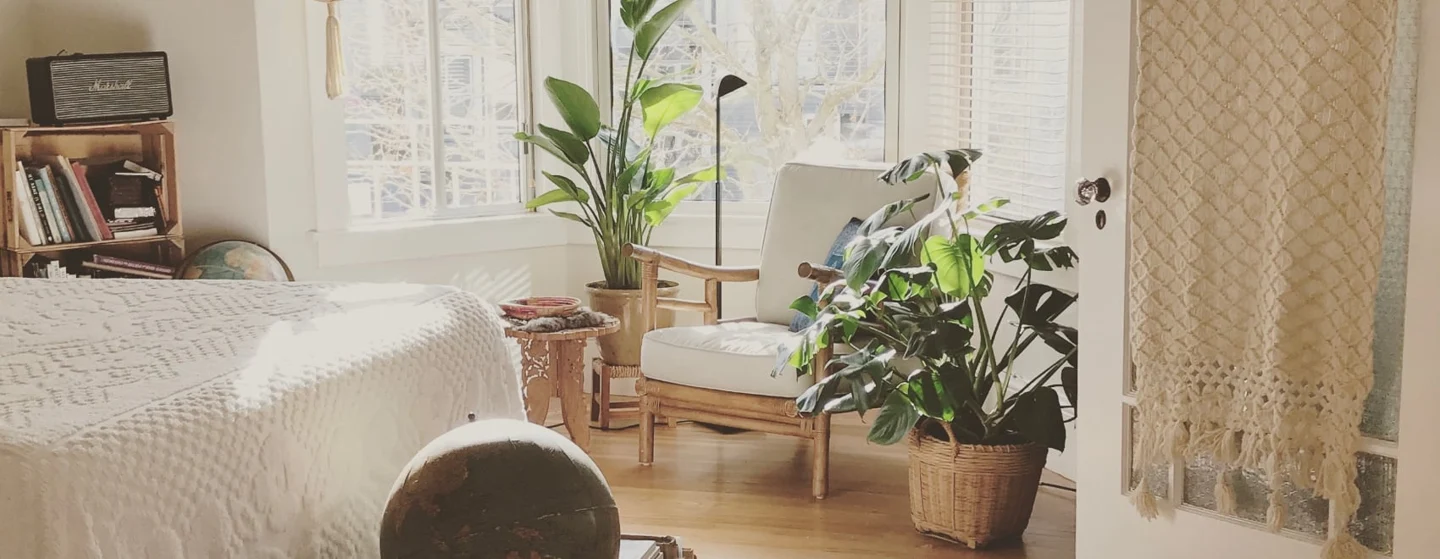
A bedroom plant should make the room easier to enjoy, not make it harder to reach the bedside lamp. A small rosette can sit comfortably on a bright windowsill; a trailing vine may work on a shelf; a broad-leaved plant needs clearance when you walk around the bed. Start with those everyday details.
Choose for the light and care the room can offer. A plant is not a treatment for insomnia or a substitute for ventilation. Its useful contribution here is visual: foliage, shape and a small piece of living growth in a space you use every day.
Look at the window before the empty corner
Check how long daylight reaches the proposed position and whether curtains remain closed for much of the day. A room can feel bright to a person while the shelf across from the window offers a plant very little useful light. Move the position closer to daylight before looking for a supposedly indestructible species.
Notice radiators, drafts and a window you open on cold nights. Leave room to draw curtains and reach the pot for watering. A hanging plant directly above pillows or electronics may look attractive in a photograph but be inconvenient when water drains or leaves need attention.
Leave enough space to inspect the leaves without moving everything on the bedside table.
For a compact, manageable outline
Spider plant, Chlorophytum comosum, offers arching foliage for a shelf or hanging basket in useful indirect light. Leave space for the plantlets rather than trimming them solely to fit a crowded ledge.
Snake plant, Dracaena trifasciata, makes an upright accent where horizontal space is limited. Use a draining pot and let the mix dry appropriately. Tolerance of lower light does not mean a windowless room is a good permanent home.
A moth orchid, Phalaenopsis, suits a bright, protected windowsill if you can check its roots and drain the pot after watering. It needs a different routine from a drought-tolerant succulent, even when both fit on the same shelf.
For softer leaves or a trailing shape
A Boston fern can make a soft, generous outline, but it needs more consistent moisture than a snake plant and may struggle in a very dry room. Choose it because its care suits the conditions, not because a bedroom automatically supplies humidity.
Pothos, Epipremnum aureum, can trail from a shelf in indirect light. Keep stems clear of lamps and walkways, and prune with the intended shape in mind.
An areca or suitable smaller palm can provide a lighter-looking floor plant than a broad-leaved tree, but check its eventual spread. A plant whose leaves brush the bed every time you pass has outgrown the position, however attractive it remains.
Let pets and fragrance change the shortlist
Snake plant, pothos, aloe and several other common houseplants are harmful if chewed by pets. Spider plants and correctly identified Boston ferns are options ASPCA lists as non-toxic to cats and dogs. Non-toxic does not mean a plant should be eaten, and a high shelf is not always inaccessible to a cat.
True lilies and daylilies are especially dangerous to cats, including pollen and vase water, so avoid them where cats have access. If fragrance bothers you, choose foliage over strongly scented flowers. Jasmine and lavender should not be promised as sleep aids, and sun-loving outdoor herbs are not necessarily easy bedroom houseplants.
When tiny flies appear beside the bedside plant
A bedroom plant becomes less restful when little flies begin circling the lamp. Before replacing the plant or spraying the room, find out where the insects are coming from. Adult fungus gnats are commonly associated with damp potting mix, but they can be confused with fruit flies and other small insects.
Look at the pot and its immediate surroundings, not just the place the flies gather. Check for water sitting in an outer container, decomposing leaves on the compost, and other pots that remain wet. The glass by the bedside and a household drain may suggest a different source; a fly near a leaf is not proof that the leaf is infested.
| What you find | What it suggests checking | What to avoid |
|---|---|---|
| Small flies repeatedly rising from damp compost | Fungus-gnat identification and the watering conditions | Adding more water because the plant looks unsettled |
| Sticky leaves or fixed bumps on stems | A different insect problem requiring closer identification | Treating every indoor pest as a fungus gnat |
| Flies present without activity around pots | Food, drains, or another source in the room | Repeatedly treating a plant that is not the source |
Minnesota Extension describes fungus gnats mainly as a nuisance indoors and recommends allowing the surface to dry as far as the plant can tolerate without wilting. That qualification matters: a fern should not be driven into drought to follow a generic fly remedy. Yellow sticky cards help monitor adult activity, but trapping adults alone does not correct the damp conditions supporting the problem. Keep cards inaccessible to pets and children.
Move the plant somewhere you can inspect it comfortably while identifying the problem. Empty collected water, remove debris, and adjust care to the species. If a treatment is needed, use a product labeled for the identified pest and indoor use, following all directions. Household perfume, essential oil, and repeated aerosol spraying are poor substitutes for finding out what is happening in the pot.
Keep the arrangement easy to maintain
Use drainage holes and an outer pot or saucer you can empty. Protect furniture from wet pots and check moisture before watering rather than giving every plant the same weekly dose. Inspect new plants for pests before placing them beside an established collection.
Begin with one plant in a suitable place and watch how it grows. Fresh, healthy leaves are better evidence of a good bedroom choice than an ambitious list of thirty plants that supposedly do everything.
Sources & further reading
This guide draws on horticultural and specialist references. Conditions vary with climate, cultivar, and site.
- RHS: aspidistras and low-light houseplants
- ASPCA: plant toxicity list
- FDA: lilies and cats
- University of Minnesota Extension: identifying and managing indoor-plant insects