In this guide
At a glance
- Different from a pit
- A firebox and often a chimney shape the setting
- Before the facade
- Specify the complete approved system
- Check
- Local restrictions, site and manufacturer instructions
- No shortcut
- A cooking oven and a fireplace are not interchangeable
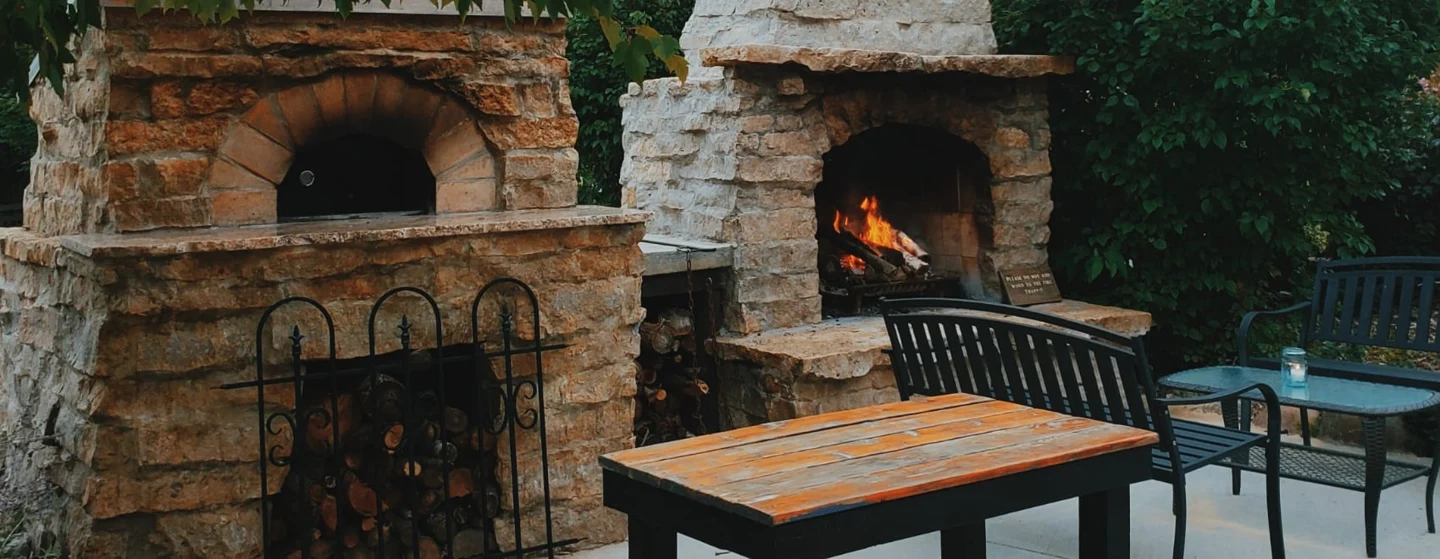
An outdoor fireplace gives a sitting area a front. Chairs face it, a wall begins to feel like part of a room, and the garden gains a substantial feature even when no fire is lit. That architectural presence can be appealing, but it deserves a little more planning than choosing a stone finish.
The visible facade is only one part of the installation. Heat, smoke, fuel, foundations, and nearby combustible material all have to be accounted for. Begin with an appropriate fireplace system and site, then decide how it should look in the garden.
Decide what kind of gathering place you want
A fireplace usually directs attention toward a firebox, often with a chimney or flue above. A fire pit tends to gather people around a central open feature. That difference affects the seating, views, and the way people move through the space.
Choose the arrangement that suits the garden rather than assuming a taller structure is an upgrade. In a modest area, a fireplace can dominate the view from inside. Draw its height and width as well as its footprint, and consider whether you will enjoy it through the seasons when it is not being used.
A chimney does not guarantee that smoke will always rise harmlessly away. Nearby structures, wind, and the exact installation can change its behavior. Have the site and system assessed rather than treating the chimney as a solution to every location problem.
Find a suitable position before committing to construction
Check local rules, current fire restrictions, property requirements, and the appliance instructions. The required clearances apply to the complete installation, including nearby walls, roof elements, furniture, planting, and overhead branches.
Think about access for construction and later servicing. A substantial masonry installation may need foundations and specialist design. Keep doors, paths, and escape routes clear, and do not use the fireplace to occupy the only practical connection between parts of the garden.
An open-sided shelter is still a shelter with heat-sensitive parts and possible combustion hazards. Never put an outdoor fireplace inside a conservatory, enclosed room, or beneath a roof simply because the seating looks inviting there. The exact system must be approved for its exact location.
Choose the firebox and fuel as one specification
Wood, propane, and natural-gas systems require different components, installation, storage, and maintenance. Do not convert between them by replacing a few visible parts or improvising a burner. Use the manufacturer's approved complete arrangement and qualified installation where required.
For a prefabricated system, understand what the kit includes and excludes: foundation, chimney, hearth, facing, utilities, and site work may be separate. A shopping description that shows a finished fireplace can conceal a much larger construction task.
For masonry construction, have the heat-exposed materials, flue, clearances, foundation, and drainage designed properly. Ordinary concrete blocks and a decorative stone veneer are not a complete fireplace specification. A good finish cannot compensate for an unsuitable firebox.
Ask for a complete installation schedule
Make one list that follows the installation from the ground up: foundation or support, firebox, fuel system, flue or chimney where applicable, hearth, facing and nearby construction. Against each item, name who specifies it, who supplies it and who confirms it has been installed as required. The purpose is to expose a gap between a decorative shell and the working appliance before that gap becomes expensive.
For example, a hypothetical terrace renovation might show a handsome fireplace wall in the landscape drawing while the appliance quotation excludes the base and flue termination. Neither document alone defines the finished system. Have those interfaces resolved by the relevant qualified people before ordering the facing material.
Ask where the installation can be inspected after completion. A permanent surround must not conceal a service point that the specified system needs to keep accessible. Keep the installation documents and operating instructions together, including the exact model and any later approved changes.
Let the facade belong to the garden
Repeat a material already present in the terrace or house, or choose a calm finish that allows planting to provide the contrast. A fireplace already has enough visual weight; it rarely needs several unrelated stone types to make its presence felt.
Place seating outside the required clear space and leave room to stand, serve, and move away. Built-in benches can create a settled arrangement but should not force occupants into one uncomfortable relationship with heat.
Consider the daytime view. Nearby storage for approved fuel, a discreet service route, and surfaces that can be kept clean will make the feature easier to live with than a design understood only as an evening photograph.
Do not assume every firebox is an outdoor kitchen
Only cook in an appliance designed and approved for that purpose, with the accessories and fuel specified by its maker. A pizza oven and a decorative fireplace perform different jobs, even if both have a masonry surround.
Keep food preparation and combustible items out of unsafe heat zones. Plan a separate work surface and lighting if cooking is part of the project. Do not allow convenience to override clearances or the need for supervision.
If what you mainly want is outdoor cooking, choose and install a cooking appliance around that task. It is easier to design the right feature first than persuade a decorative one to do work it was never built for.
Keep the operating habits as considered as the design
Use only approved fuel and follow the lighting and shutdown instructions. Never use gasoline or add liquid fuel after trying to light a fire. Keep appropriate extinguishing equipment available and stop when wind, restrictions, or wildfire conditions make use unsafe.
Supervise the fire, keep children and pets clear, and fully extinguish or shut down the system before leaving. Arrange cleaning and inspection according to the appliance and flue requirements, and deal with faults before the next use.
A fireplace should add a comfortable reason to be outdoors. When the entire system is planned together, the garden gains a gathering place rather than a handsome structure with a difficult routine attached.
Design for inspection as well as atmosphere
Illinois Extension explains that creosote can accumulate as wood smoke cools in a chimney and that high-heat appliances and chimneys need regular maintenance. It recommends annual firebox inspection for fireplaces. Apply the inspection and cleaning schedule appropriate to your own system, fuel, usage and local requirements with a competent professional; do not assume an outdoor setting removes the need.
Check the visible installation when it is cold. Cracked or loose material, displaced components, a damaged screen and evidence of water entry deserve attention before use. A fresh coating or new facing does not establish that the underlying firebox and chimney remain sound.
Keep adjacent planting in the maintenance brief. Draw it at its eventual size and preserve the appliance's required clear zone as the plants grow. The same applies to cushions, movable screens and temporary decorations: a safe layout on the installation day can become a different layout during a party.
If the fireplace is mainly an architectural backdrop, assess it with no flame and no special staging. A comfortable ordinary seating place should remain worthwhile when weather, smoke concerns or local restrictions prevent burning. That gives the garden a useful room through more of the year without asking the fire to justify every evening outdoors.
Sources & further reading
This guide draws on horticultural and specialist references. Conditions vary with climate, cultivar, and site.
- NFPA: fire-pit and recreational-fire guidance
- CPSC: liquid-fuel fire hazards
- US Fire Administration: outdoor fire safety
- Illinois Extension: Firewood burning safety