In this guide
At a glance
- Start with
- Use, access and site conditions
- Plan for
- Mature plant size
- Best first step
- A measured sketch
A garden can have lovely plants and still feel oddly difficult to use. The chairs sit in the wind, the path cuts through the only sunny patch, and carrying a watering can becomes a small expedition. Before choosing a style, decide what an ordinary day in the space should look like. A place to eat outside, somewhere for children to play, a few vegetables and a quiet view from the kitchen are all good starting points. You do not need to fit every garden idea into the same plot.
Make a useful plan before a beautiful one
Measure the garden and draw the house, boundaries, doors, existing trees and fixed features to scale. Include the less photogenic necessities: bins, drains, outdoor taps and access to a shed. These determine whether a layout works once somebody actually lives with it.
Then sketch the movements you make most often. The route to a gate should be direct enough that people use it; a winding stroll can belong elsewhere. Try the proposed dining space with the actual chairs pulled out. Leaving room to sit down matters more than squeezing in an extra planter. Mark important underground services before planning excavation, and use professional advice for substantial construction or changes of level.
Turn wishes into a brief you can test
Write three statements about what the finished garden should let you do. “Eat outside with four people without blocking the back door” is testable; “make it modern” leaves the essential question unanswered. Add one constraint to each statement, such as keeping an established tree or reaching storage without crossing a muddy lawn.
NC State's design process separates the base plan, site survey and activity areas before the finished design. Keep those layers distinct on tracing paper or separate copies. Fixed drains and door positions should not disappear beneath an appealing new border. When a proposal conflicts with the survey, change the proposal or obtain the specialist information needed to establish what is possible.
At a drawing scale of 1:50, a metre on the ground occupies 2 centimetres on paper. As an illustrative exercise, a 5-by-8-metre garden becomes a 10-by-16-centimetre rectangle. Add furniture at the same scale; an oversized plant symbol can otherwise hide how much the layout is asking of a modest site.
Let the site edit your wish list
Watch where sunlight falls through the day and notice what happens after rain. A bright corner may be dry and exposed, while the ground beneath a tree can be shaded and thirsty at the same time. Record what you find rather than treating the whole garden as one set of conditions.
Keep healthy established plants that contribute shade, privacy or structure, even if they do not appear in the first inspiration photograph you saved. Working around a mature tree can give a design character that a row of newly planted specimens will take years to develop. Assess the soil before selecting plants, and check regional suitability rather than assuming a familiar garden style comes with a universal plant list.
Choose one organising idea
A simple framework makes room for individual choices. In a narrow garden, a path offset from the centre can leave space for a generous planted bed. A courtyard might work around one tree and a place to sit. In a larger plot, linked spaces can separate lively meals from a quieter planted corner.
Repeat a material or plant shape so those spaces feel related. That does not require matching everything. Gravel next to weathered brick, or soft foliage against a clean-edged terrace, can be more interesting than a complete set of identical surfaces. Keep the palette small enough that a change in texture is something you notice.
Two layouts to adapt to your own plot
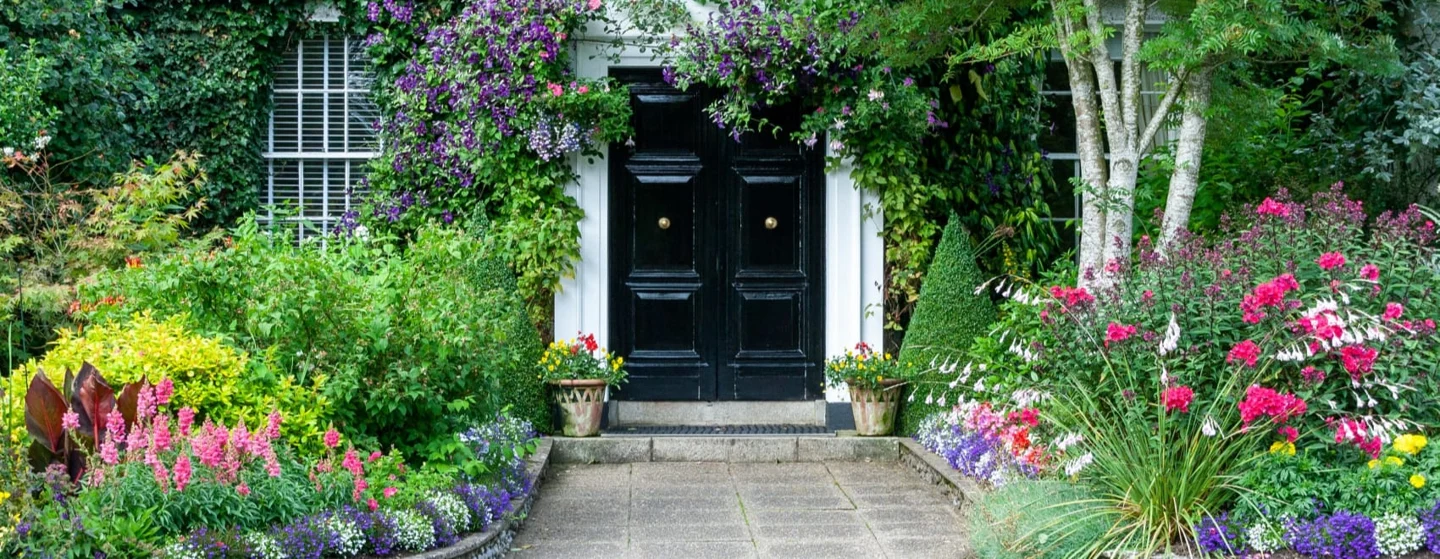
For a compact front garden, keep the main route to the door clear and direct, with room for its actual uses, including deliveries and bins. Put planting beside that route rather than scattering obstacles across it. One suitable small tree or a repeated group of shrubs can give the entrance a clear identity; check mature growth against windows, services and access.
In a family backyard, a practical starting arrangement is a dining area near the kitchen, an open usable centre and a planted boundary. Place growing beds where their light and watering needs can be met, with a clear route from storage. Adjust those relationships to the site rather than preserving a lawn or terrace shape simply because it already exists.
Compare alternatives with the same questions
Give each sketch a simple assessment: does the main route work, can people occupy the sitting area, is maintenance access retained, and does the planting fit its conditions? Do not award the most elaborate drawing extra credit. A simpler layout may satisfy more of the actual brief.
For a front garden, compare the route a person carrying shopping naturally takes with the route your new path provides. Where they disagree, investigate before planting across the desire line. For a backyard, put chairs on the proposed terrace and look back at the house; this often reveals an awkward doorway relationship that a plan view conceals.
Keep the discarded option with a sentence explaining why it lost. Perhaps it had better evening sun but a poor route for food, or more planting but no room to turn a wheelbarrow. That record makes later decisions easier. If your needs change, you can revisit the tradeoff rather than starting from another collection of unrelated inspiration images.
Plant for the view and the calendar
Start with the plants that will establish the long-term shape of the garden, then add smaller layers. Check mature spread before placing a shrub beside a path or window. A plant that must be cut back every few weeks to preserve the route is asking to be somewhere else.
Combine foliage, stems and seasonal flowers rather than depending on one spectacular month. Repeating a few well-chosen plants can make a border look considered, while isolated specimens of everything tend to compete for attention. Leave enough space for growth and use temporary planting sparingly if gaps bother you during the first season.
Give small gardens a clear job
In a modest space, decide which activity deserves the most comfortable position. A compact table might be more valuable than a lawn nobody can use. A single generous planting bed can create a stronger impression than thin strips around every boundary.
Vertical planting can soften a fence, but allow for the support, pruning access and watering it will need. Containers are useful where soil is unavailable or a plant needs particular conditions; they also create another maintenance routine. Group a few purposeful pots where you will see them instead of distributing small ones throughout the garden.
Build in the order that avoids rework
Resolve drainage, access, levels and construction before planting the finishing layers. Put the largest permanent features in place first, then work toward paths, beds and smaller details. It is easier to change a pencil line than move a finished terrace.
If the budget requires stages, make each one usable. A sound path, a comfortable seat and one properly prepared bed will serve you better than half-completed features everywhere. Keep a record of what thrives and what feels inconvenient. Good garden design continues through use: moving a chair or replacing an ill-suited plant is part of making the place your own.
Sources & further reading
This guide draws on horticultural and specialist references. Conditions vary with climate, cultivar, and site.
Our editorial standards →